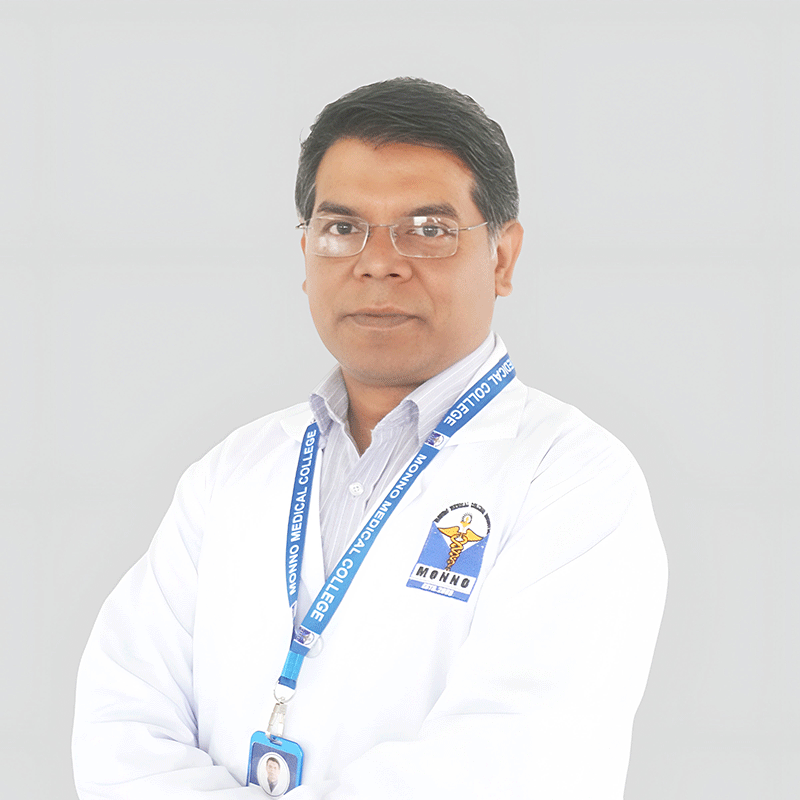
Professor Dr. Borhan Uddin Ahamed is a distinguished academic and medical professional currently serving as the vice-principal, academic coordinator, professor, and head of the forensic medicine department at Monno Medical College and Hospital in Manikganj, Dhaka, Bangladesh. He joined the institution on February 26, 2014.
Born on June 30, 1979, Dr. Ahamed has an extensive educational background. He earned his MBBS degree, followed by a Diploma in Forensic Medicine (DFM). Demonstrating a commitment to interdisciplinary studies, he also obtained a Bachelor of Laws (LLB) and a Master of Social Sciences (MSS) in Victimology and Restorative Justice from the University of Dhaka.
In his role at Monno Medical College, Dr. Ahamed has been instrumental in shaping the forensic medicine curriculum and mentoring future medical professionals. His leadership as vice-principal and academic coordinator underscores his dedication to academic excellence and institutional development.
Dr. Ahamed’s research interests are diverse, encompassing forensic science, medical ethics, the doctor–patient relationship, community development, forensic social work, and restorative justice. He has authored 19 peer-reviewed articles, contributing valuable insights to these fields. His current research focuses on the role of restorative justice as a strategy to address youth violence, conflict resolution in medical negligence cases, community development through civic engagement in the judiciary system, and the application of restorative practices in medical education.
Beyond his administrative and research responsibilities, Dr. Ahamed is committed to teaching medical ethics, emphasizing the importance of professionalism and ethical conduct in medical practice. His interdisciplinary approach and dedication to integrating restorative justice principles into medical education highlight his innovative contributions to the field.
Dr. Ahamed’s multifaceted career reflects a profound commitment to advancing medical education, ethical practice, and community engagement, establishing him as a prominent figure in both the medical and academic communities in Bangladesh.